How Large Engineering Teams Reduce Coordination Overhead Without Slowing Down Delivery
Learn how large engineering teams improve engineering productivity through clear ownership, asynchronous workflows, documented decisions, and independent releases.

Key Takeaways
-
More engineers don't always mean higher productivity. Unclear ownership and growing dependencies can slow delivery.
-
Clear ownership reduces bottlenecks. Define responsibilities and backup coverage to prevent approval delays.
-
Asynchronous workflows reduce waiting. Use clear communication and shared information to minimize unnecessary handoffs.
-
Documented decisions preserve knowledge. Make important decisions accessible to reduce reliance on individuals.
-
Independent releases improve delivery efficiency. Use feature flags and backward compatibility to reduce cross-team dependencies.
-
Measure coordination, not just output. Track review delays, handoffs, and delivery stability to identify friction.
-
Engineering capacity can scale faster than an organization's ability to coordinate it.
As engineering teams expand, greater headcount does not always translate into higher engineering productivity or faster delivery. More contributors introduce additional handoffs, dependencies, and decisions that can slow the path from development to production.
These delays often reflect a delivery model that has not evolved alongside engineering capacity.
Drawing on CodeLink's engineering experience, this article examines four common sources of coordination overhead and practical ways to address them.
Why Coordination Overhead Increases as Engineering Teams Scale
As large engineering teams grow, so does the complexity of managing dependencies between contributors. This dynamic reflects Conway's Law: software systems tend to mirror the communication structures of the organizations developing them.
When responsibilities are unclear, changes cross team boundaries, approvals accumulate, and routine decisions require multiple stakeholders.
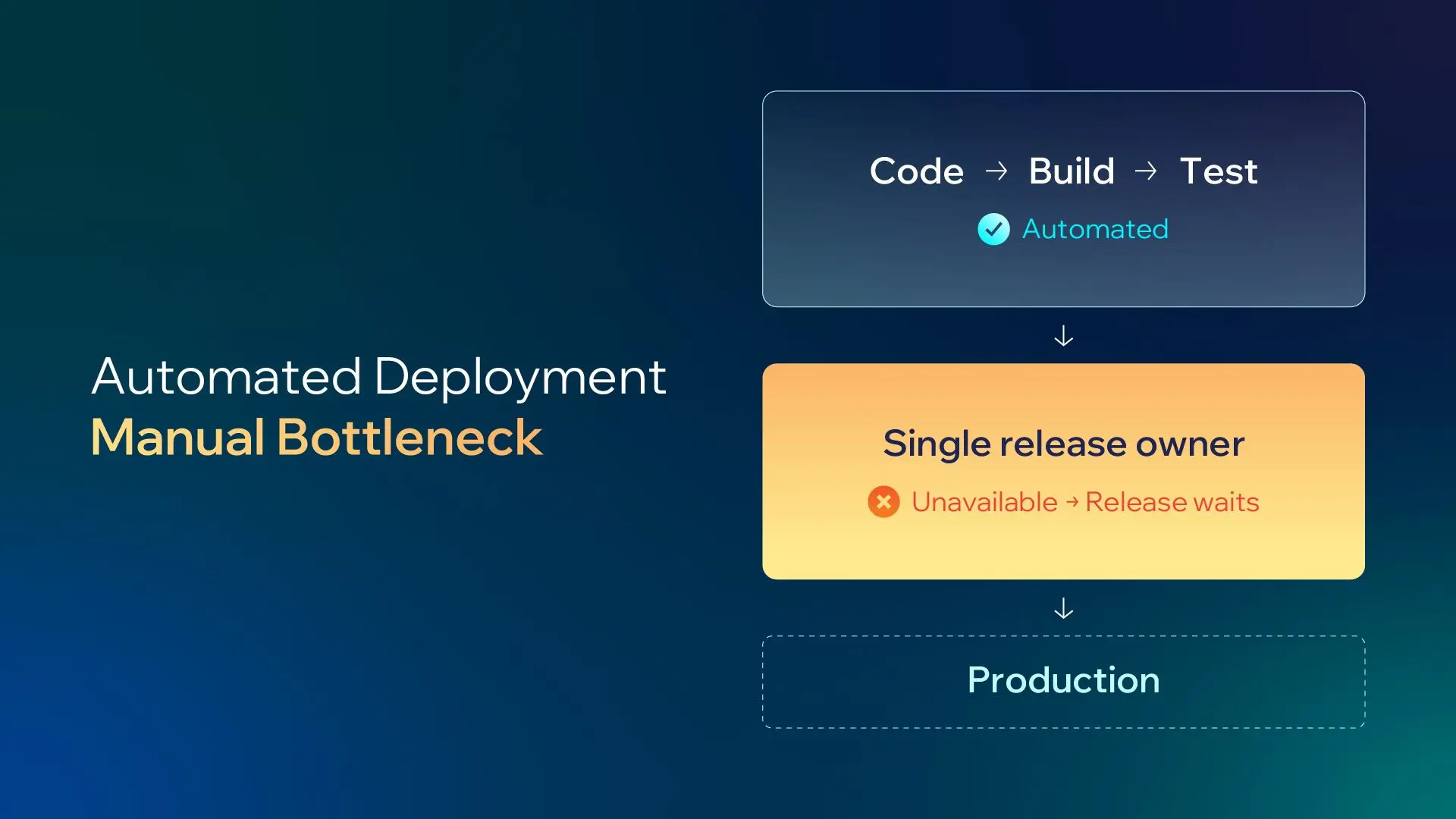
In one of our engagements, much of the deployment process had already been automated. However, final production releases still depended on one person. Whenever that individual was occupied with other priorities, releases had to wait.
The experience highlighted an operational dependency that technical automation alone could not resolve: release ownership and backup coverage also needed to be explicit.
Four Coordination Bottlenecks That Slow Software Delivery
Improving engineering productivity begins with identifying where delivery time is lost.
Based on CodeLink's engineering experience, four recurring patterns can create software development bottlenecks even when the technical work is relatively straightforward.
1. Unclear Ownership Across System Boundaries
In distributed systems, components may be organized around business domains while review responsibilities follow different team structures.
We've seen how this mismatch complicates change ownership. Even when automated tests pass, a change may still require additional coordination to identify the appropriate reviewer. Shared components present similar challenges when several engineers contribute without clearly assigned maintenance responsibility.
The result is additional review effort and ambiguity over who can approve a change.
2. Synchronous Dependencies That Extend Delivery Cycles
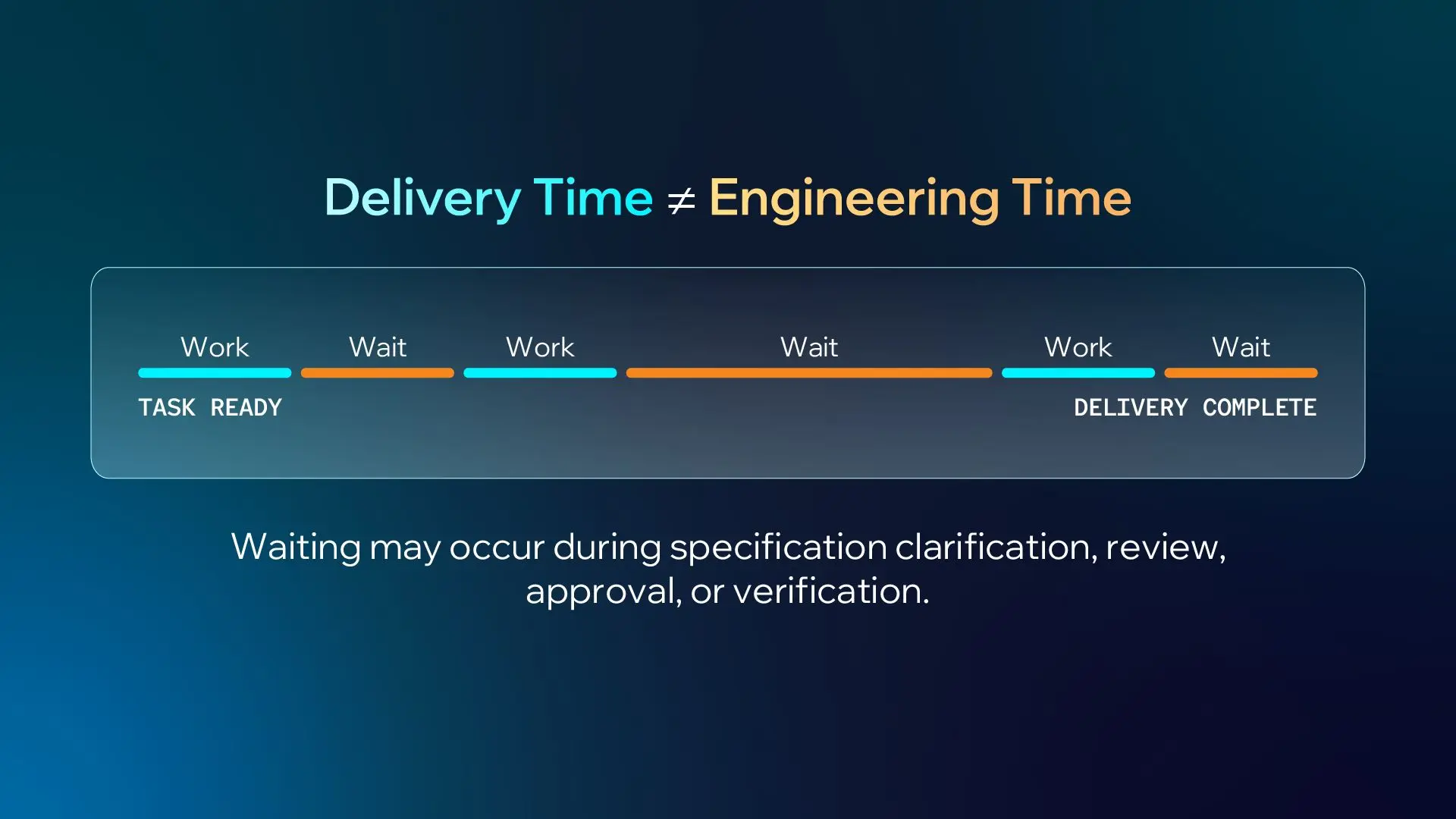
A task requiring a few hours of engineering effort can take days when it depends on sequential handoffs.
In our delivery work, dependencies involving specifications, sample data, reviews, and verification have illustrated how waiting time can extend otherwise straightforward tasks. These delays may stem from internal capacity constraints, external dependencies, or competing priorities.
The key distinction is between time spent completing work and time spent waiting for work to continue.
3. Institutional Knowledge That Remains Undocumented
Engineering teams often rely on informal rules about review ownership, ticket requirements, and escalation paths.
At CodeLink, we've also encountered situations where important project updates were scattered across multiple conversations, making decisions and next steps difficult to track.
The team addressed this by establishing a designated point of contact, documenting decisions, and maintaining status in one shared location.
The experience reinforced a practical lesson: increasing communication volume does not necessarily improve engineering coordination**.** Information needs clear ownership and an accessible, reliable source.
Without these practices, routine decisions can become dependent on individuals who hold the relevant knowledge.
4. Release Processes That Require Collective Readiness
Teams may develop independently but remain coupled at deployment.
When releases involve multiple services, shared environments, or external integrations, one delayed component can block the entire release. This is particularly relevant when teams must coordinate around a shared release date despite maintaining separate areas of responsibility.
Even mature CI/CD pipelines cannot eliminate these dependencies when deployment requires synchronized approvals or incompatible technical changes.
Four Principles for Reducing Engineering Coordination Overhead
Reducing coordination overhead requires improvements to both engineering practices and organizational responsibilities.
The objective is to remove unnecessary dependencies while preserving accountability, quality, and operational control.
Principle 1: Establish Clear Ownership Without Creating New Bottlenecks
Each service or significant module should have an accountable owner, defined review responsibilities, and backup coverage.
Clear ownership reduces ambiguity about where changes belong, who can approve them, and who maintains the system.
GitHub's CODEOWNERS, for example, can automatically request reviews from designated individuals or teams based on modified files.
However, ownership should not create exclusive authority. Requiring a single specialist to approve every change can reproduce the bottleneck it was intended to resolve.
Balance accountability with risk-based reviews, shared technical knowledge, and backup reviewers.
Where to start: Examine components with recurring review delays. Assess whether ownership, approval requirements, and backup coverage are appropriately distributed.
Principle 2: Design for Asynchronous Progress
Not every dependency warrants a meeting or immediate response. Written updates, explicit action owners, and shared project information allow work to progress without unnecessary interruptions.
As CodeLink's experience with fragmented project communication demonstrated, each important update needs a clear owner, current status, and next action. A shared source of information can reduce the need to search through multiple conversations.
The same principle applies to software architecture.
In distributed systems, asynchronous messaging, background processing, and event-driven patterns can reduce dependencies between services when immediate responses are unnecessary.
However, asynchronous systems require observability, retries, idempotency, and failure handling to prevent delays from becoming invisible. Synchronous communication remains valuable when immediate alignment resolves complexity faster.
Where to start: Identify recurring handoffs and determine whether clearer documentation, direct communication, or asynchronous processing could eliminate waiting.
Principle 3: Make Architectural Decisions Accessible and Traceable
Undocumented decisions become increasingly costly as engineering organizations expand. Without a reliable record of previous choices, teams revisit resolved questions, introduce inconsistent implementations, or depend on senior engineers to reconstruct context.
Architecture Decision Records (ADRs) provide a lightweight way to preserve significant decisions, including their rationale, alternatives, ownership, and constraints.
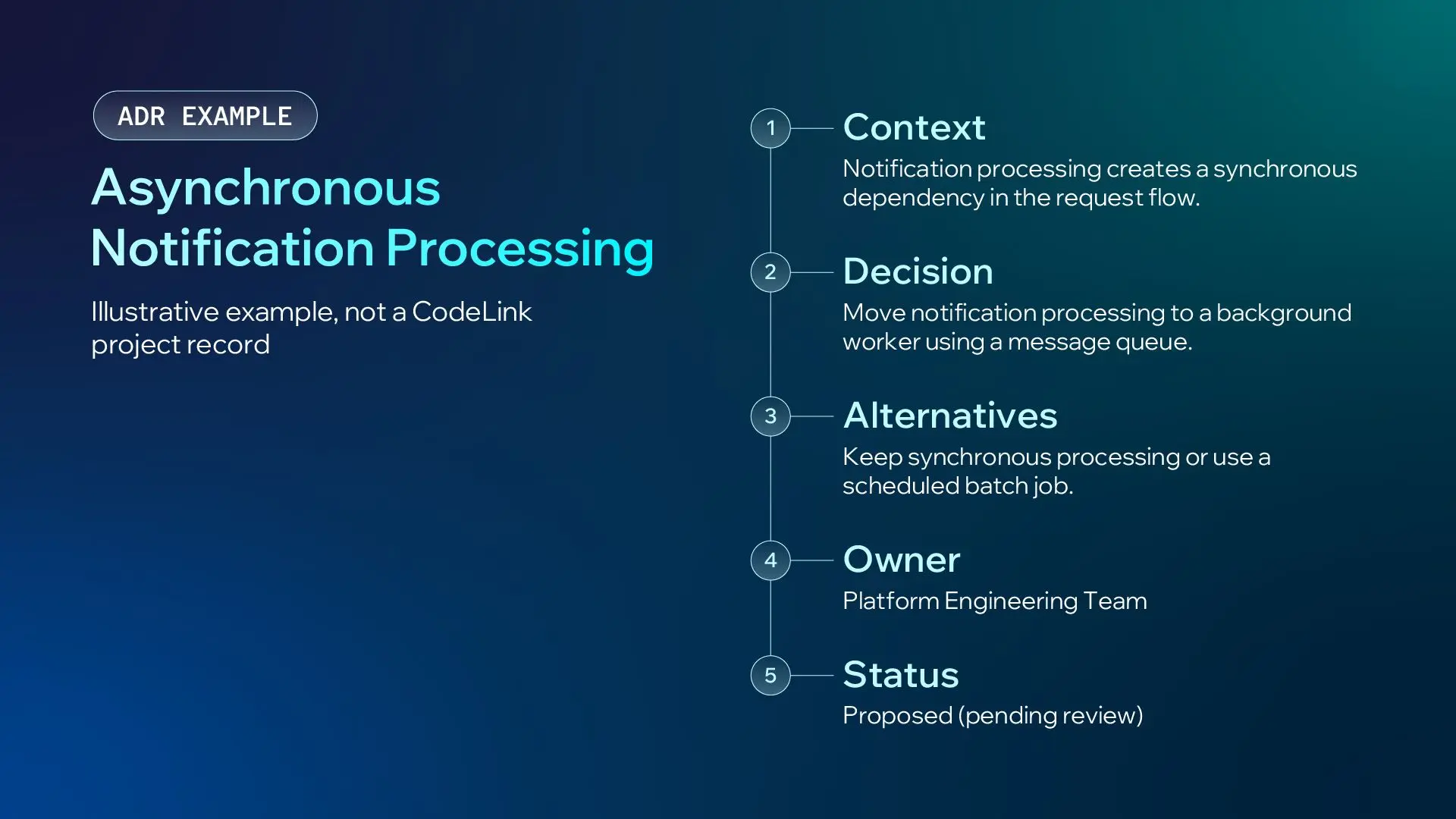
Smaller choices may require only a concise explanation within an existing ticket. Maintain one canonical source for important decisions, make approval status visible, and define what each decision authorizes.
Documentation should remain proportional to risk. Excessive recording and approval requirements can create new coordination costs.
Where to start: Standardize decision records for choices affecting multiple teams, introducing significant operational risk, or requiring costly reversals.
Principle 4: Enable Independent, Controlled Releases
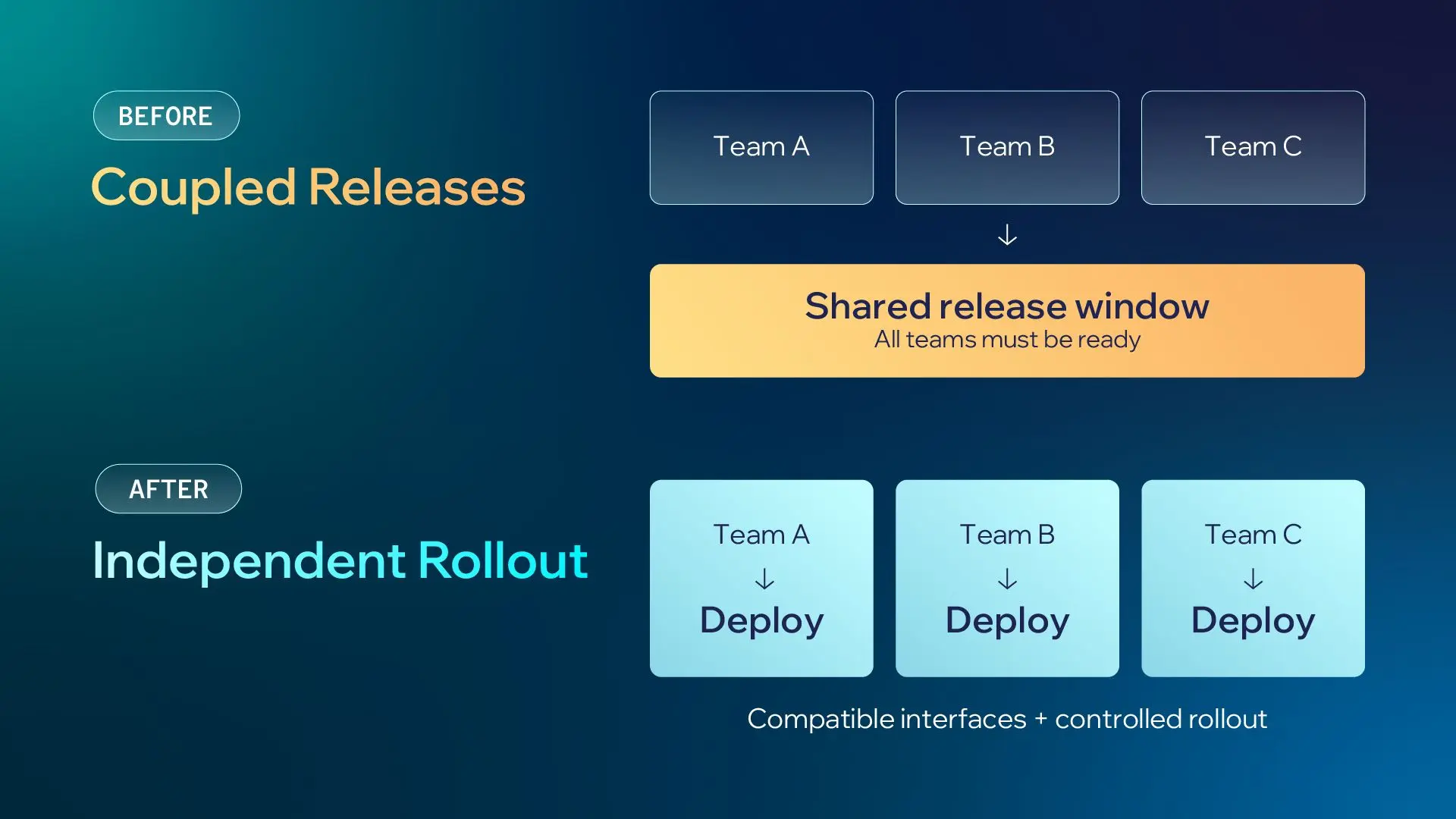
Deployment independence is a key enabler of engineering team scalability and software delivery efficiency. When teams can release without requiring simultaneous action from others, they gain greater control over delivery schedules and dependencies.
Practices such as trunk-based development, feature flags, staged rollouts, and backward-compatible interfaces help separate deployment from feature activation.
Feature flags, for example, allow teams to deploy new functionality while keeping it disabled until release conditions are met.
For shared APIs or data structures, an expand–migrate–contract approach supports gradual transitions: introduce a compatible implementation, migrate dependent consumers, then remove the previous version.
These techniques reduce the need for synchronized releases while maintaining operational control.
They also introduce complexity. Temporary compatibility paths and feature flags require testing, ownership, and planned removal.
As our earlier release experience showed, deployment independence also requires clear operational responsibilities. Automating the technical process is insufficient if release authority remains concentrated in one person.
Where to start: Review a release involving multiple teams. Distinguish unavoidable technical dependencies from those created by existing approval and deployment procedures.
How to Measure Improvements in Engineering Coordination
Reducing coordination overhead should improve delivery predictability without compromising stability.
Engineering leaders can monitor five indicators:
-
Review waiting time: Time between work becoming ready and receiving its first meaningful review.
-
Cross-team dependency delays: Time lost awaiting inputs, decisions, or approvals.
-
Delivery performance: Deployment frequency alongside failed changes, incidents, and rollbacks.
-
Engineer onboarding time: Time required for a new engineer to complete and release a meaningful change.
-
Responsibility distribution: Concentration of reviews, releases, and on-call duties among individuals.
Established frameworks such as DORA's software delivery metrics can help assess throughput alongside delivery instability.
Establish a baseline before implementing changes, then compare equivalent periods. Treat improvements as signals to investigate rather than proof of causation.
Keep measurement focused on decisions it can inform, rather than introducing another layer of reporting overhead.
Engineering Scalability Requires Organizational Scalability
Sustainable engineering productivity depends on more than infrastructure performance or engineering headcount.
Clear ownership reduces ambiguity. Asynchronous workflows limit unnecessary waiting. Documented decisions preserve institutional knowledge. Independent releases give teams greater delivery autonomy.
The objective is not to eliminate coordination, but to make it proportionate to the complexity and risk of the work.
FAQs
By clarifying ownership, reducing handoffs, documenting decisions, and enabling independent releases to minimize coordination overhead.
Unclear ownership, lengthy approvals, undocumented knowledge, and tightly coupled deployments that delay delivery.
Establish clear responsibilities, prioritize asynchronous communication, and maintain accessible project information and decisions.
Clear system boundaries, backward-compatible interfaces, and independent deployments allow teams to work with fewer cross-team dependencies.
Track review delays, handoff times, deployment frequency, delivery stability, and onboarding time to identify bottlenecks.
Hiep Dinh
Principal Software Engineer
A Principal Software Engineer with over seven years of experience building scalable systems across insurance, recruitment, and payment platforms. He specializes in back-end architecture, technical leadership, and working with clients to deliver reliable solutions aligned with business goals.