CodeLink’s Secure SDLC for Enterprise Software Delivery
See how CodeLink adapts Secure SDLC to our enterprise delivery context, balancing security, governance, client requirements, and delivery speed across complex software projects.

A Secure Software Development Lifecycle (SSDLC) is a baseline expectation for mature technology organizations. But in real enterprise delivery, applying it well is rarely straightforward. For CodeLink, the challenge is adapting SSDLC across different client environments, risk levels, delivery models, and security requirements.
This blog explains how CodeLink tailored its SSDLC approach to make security, governance, and delivery discipline practical across enterprise software projects.
The Enterprise Delivery Challenge
A Secure SDLC embeds security, quality, and governance across the software delivery lifecycle, giving teams a structured way to manage risk from planning through release and review.
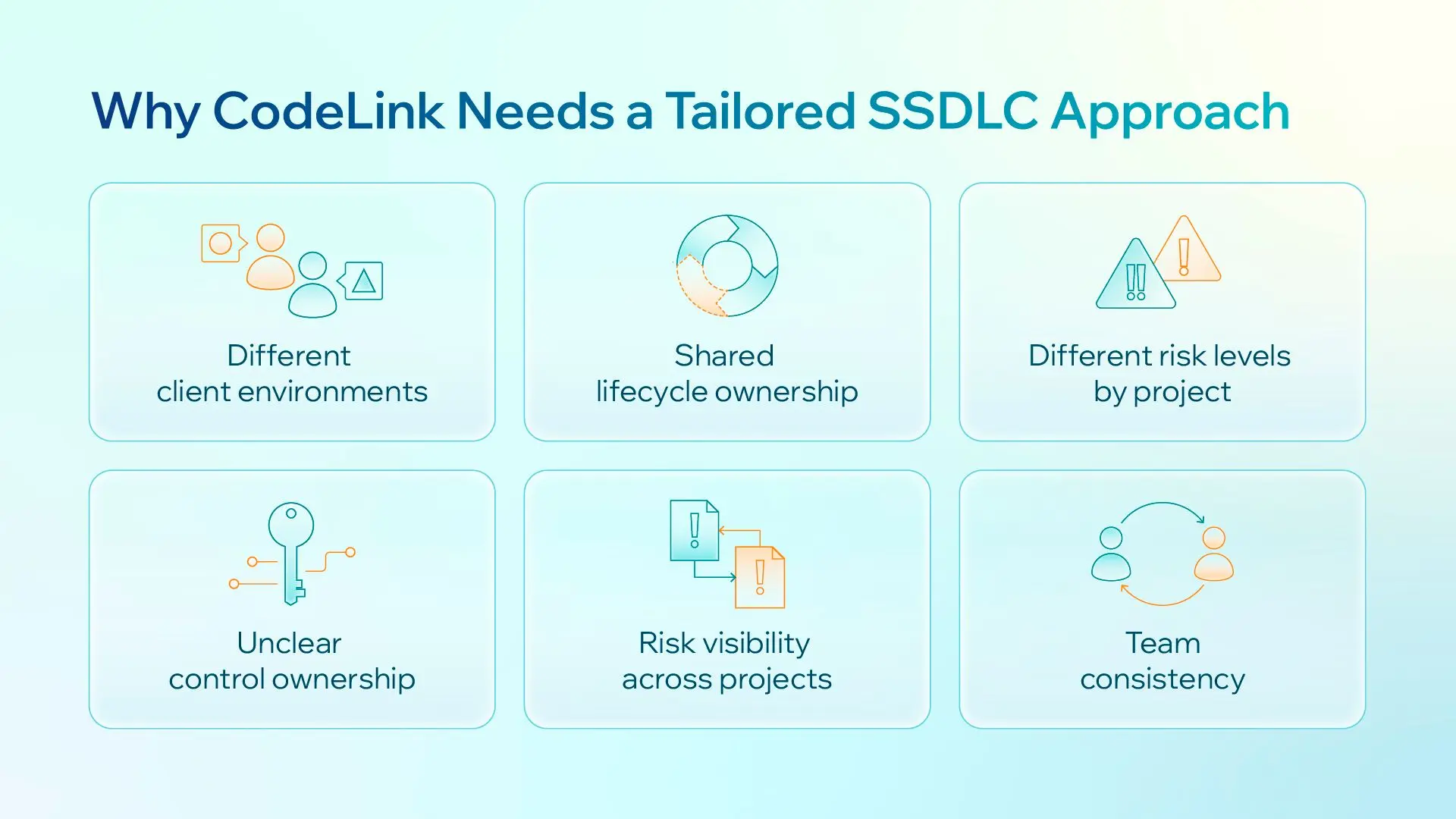
Nevertheless, CodeLink’s delivery context is complex. We partner with clients across different countries, industries, regulatory environments, and maturity levels, so the process should be flexible enough to adjust for each project’s requirements:
-
Varied client environments: Each client operates with its own technical standards, compliance expectations, approval workflows, and delivery maturity.
-
Shared SDLC ownership: In many engagements, CodeLink does not own the full software development lifecycle end-to-end. Infrastructure, deployment approvals, compliance policies, or roadmap priorities may remain under the client’s control.
-
Project-specific risk levels: Some projects require strict test coverage (up to 90-100%), detailed audit evidence, automated security testing, and controlled release processes. Others have narrower scopes and prioritize delivery velocity or time-to-market, where lighter controls may be appropriate based on the agreed risk profile.
-
Control ownership ambiguity: Without a shared framework, teams may not always know which security practices are required, which controls are owned by CodeLink, and which depend on the client’s environment.
-
Cross-project risk visibility: Delivery managers and technical leads need a consistent way to track security risks, skipped controls, documentation gaps, and mitigation plans across multiple engagements.
-
Team continuity and consistency: Project members may move between engagements, so they need a clear operating standard instead of relearning expectations from scratch each time.
Risk-Based, Not One-Size-Fits-All
A rigid SSDLC can create unnecessary process overhead. A loose SSDLC can leave security gaps, unclear ownership, and inconsistent delivery practices.
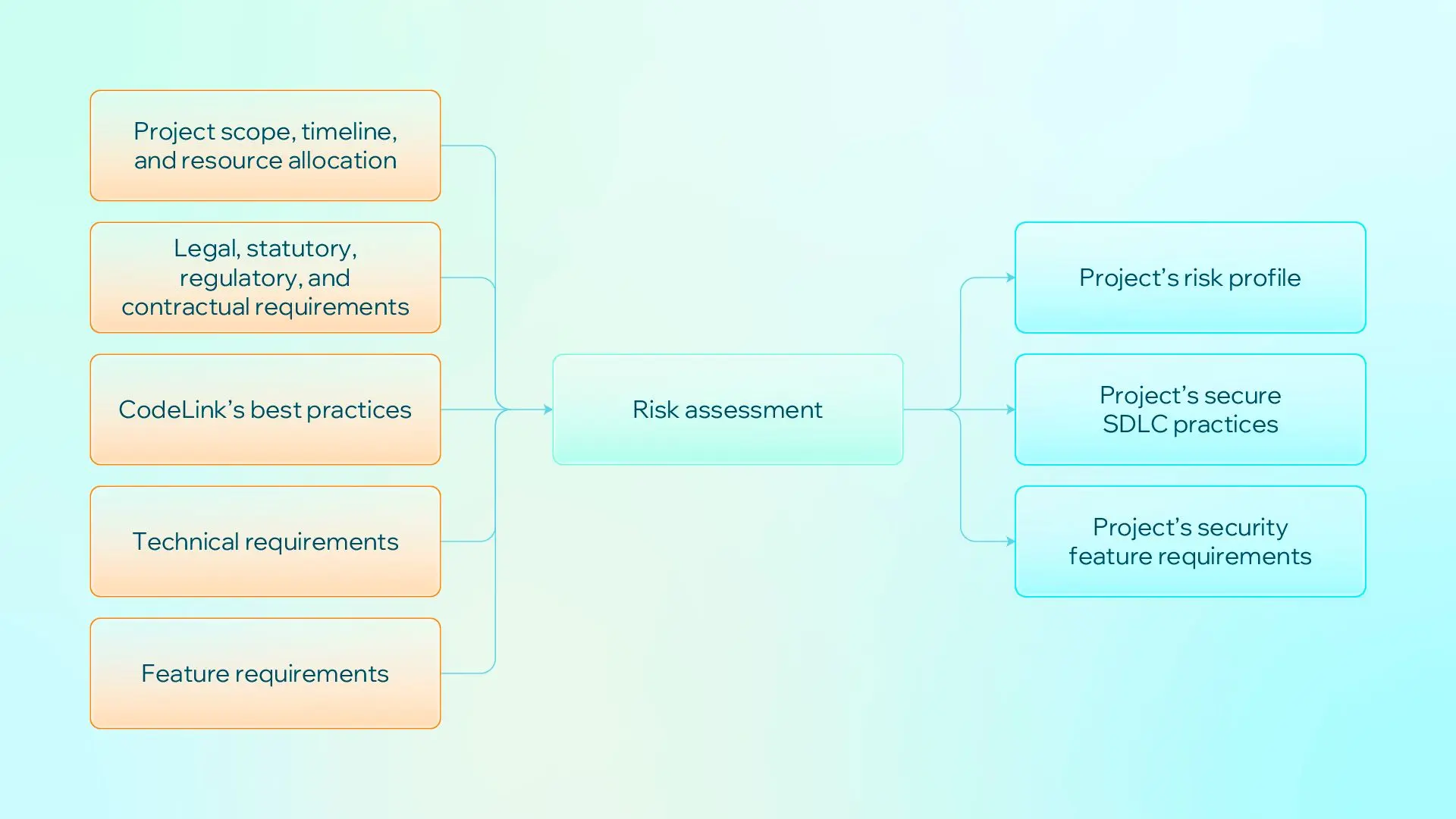
CodeLink’s approach sits between those extremes. We use a risk-based SSDLC model that defines baseline expectations for every project, then adds stronger controls where the project risk profile requires them.
This means every engagement starts with a common foundation, but the depth of security review, test evidence, automation, and release control can vary based on scope, compliance needs, system criticality, and client operating model.
That is the practical balance: consistent enough to govern, flexible enough to deliver.
How CodeLink Applies SSDLC in Practice
CodeLink has built and implemented this approach around three operating principles:
-
Shift-left security: Security ownership belongs to the whole project team, not only QA or SecOps. Engineers, technical leads, delivery managers, QA, and other project members share responsibility for identifying risks early and following agreed controls.
-
SWAT Security Feature Checklist: Feature-level checkpoints help teams confirm that required security controls are considered before implementation. If a control is skipped, the decision must be documented and aligned with the client.
-
Risk-based change management: Clear Owners and Reviewers are assigned for each change request, keeping changes visible, controlled, and traceable without creating unnecessary bottlenecks.
Together, these principles help CodeLink apply security throughout the software development lifecycle while staying flexible to each client’s delivery model.
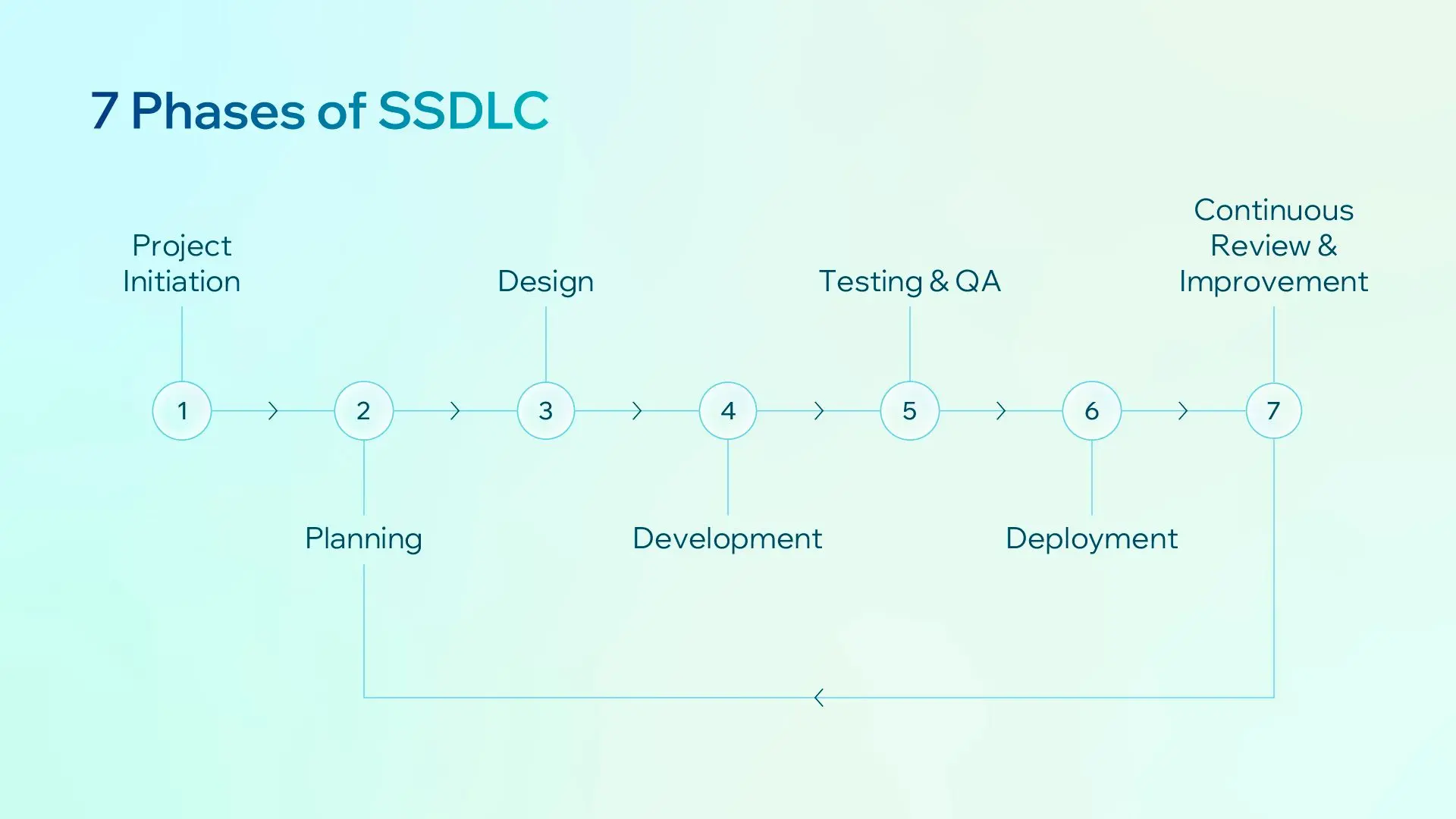
Phase 1: Project Initiation
Project initiation defines the delivery foundation before execution begins. This phase establishes the project risk profile, required SSDLC practices, team setup, access expectations, and security responsibilities.
For CodeLink, this phase is where project-specific expectations become explicit. Because each client environment may have different tools, access rules, communication norms, and security requirements, initiation helps the team clarify responsibilities before delivery starts.
Phase 2: Planning
Planning establishes the objectives, delivery direction, and implementation approach. It clarifies what needs to be engineered, why it matters, and how the team should structure the work.
This phase is especially important because CodeLink engagements vary by delivery model. Some teams are embedded into the client’s workflow, while others operate more independently. Planning helps align scope, ownership, delivery priorities, and risk expectations before implementation begins.
Phase 3: Design
The design phase translates project requirements into a complete product and technical blueprint. This goes beyond UI & UX to include user flows, interface design, system architecture, technology decisions, data flows, and security considerations.
This is where shift-left security becomes practical. For features involving sensitive data, integrations, authentication, or other higher-risk areas, Security Champions may be involved early to identify and flag concerns while the system is still being designed, rather than after implementation is complete.
Phase 4: Development
The development phase is where implementation begins. The engineering team writes code, builds the features defined in the backlog, and integrates approved designs into the wider system environment.
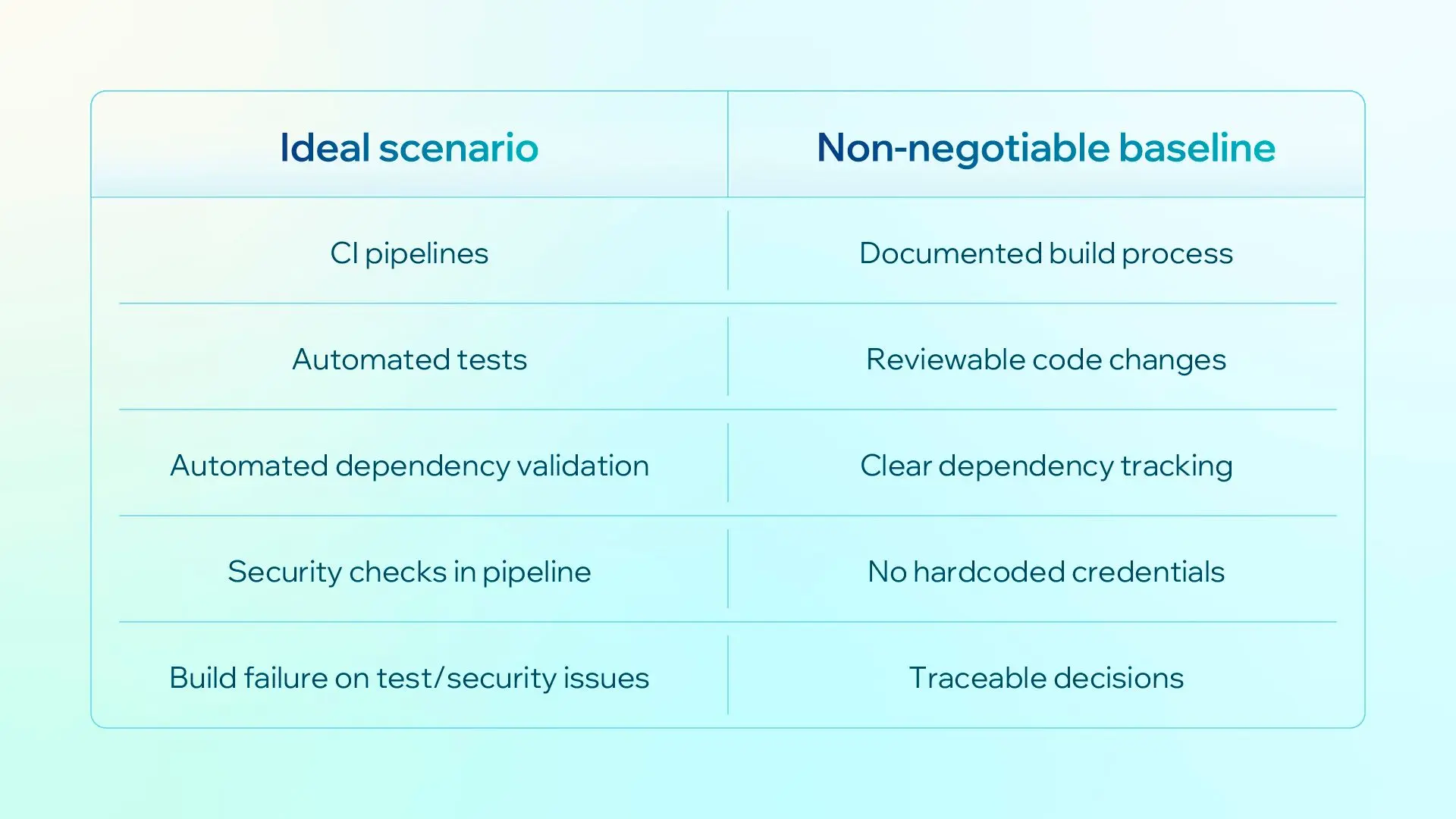
In the ideal scenario, this phase is supported by automation, including CI/CD pipelines, automated builds, automated tests, dependency validation, and security checks. These controls help teams detect issues earlier and reduce the risk of inconsistent builds, unmanaged dependencies, or late-stage defects.
However, not every project starts with the same level of automation maturity. In those cases, CodeLink’s non-negotiable baseline is traceability. Even when parts of the process remain manual, the team must keep development practices documented, code changes reviewable, and build expectations clear enough for engineers, technical leads, and new project members to follow.
Phase 5: Testing & Quality Assurance
The testing phase evaluates features to ensure they meet defined requirements, functional expectations, and quality standards before release.
Because project risk levels vary, testing depth may also vary. Some projects require strict test coverage, automated security testing, and detailed audit evidence, while others may use lighter controls based on scope and agreed risk levels. In all cases, CodeLink treats testing evidence as non-negotiable: outcomes must be visible, traceable, and clear enough to support release decisions.
This phase turns testing from a task into release evidence, helping stakeholders understand whether the software is ready to move forward.
Phase 6: Deployment
The deployment phase makes the software available to its intended users or target environment. Depending on the type of software, this may involve deploying to production servers, releasing a mobile application, or integrating new features into an existing system.
This phase requires clear release discipline because deployment responsibilities may be shared between CodeLink and the client. Release planning, access control, and deployment traceability help ensure that production changes are visible, authorized, and aligned with the agreed process.
Phase 7: Continuous Review & Improvement
The review phase evaluates both the delivered product and the development process. It helps the team confirm whether completed work meets stakeholder expectations and identify improvements for future iterations.
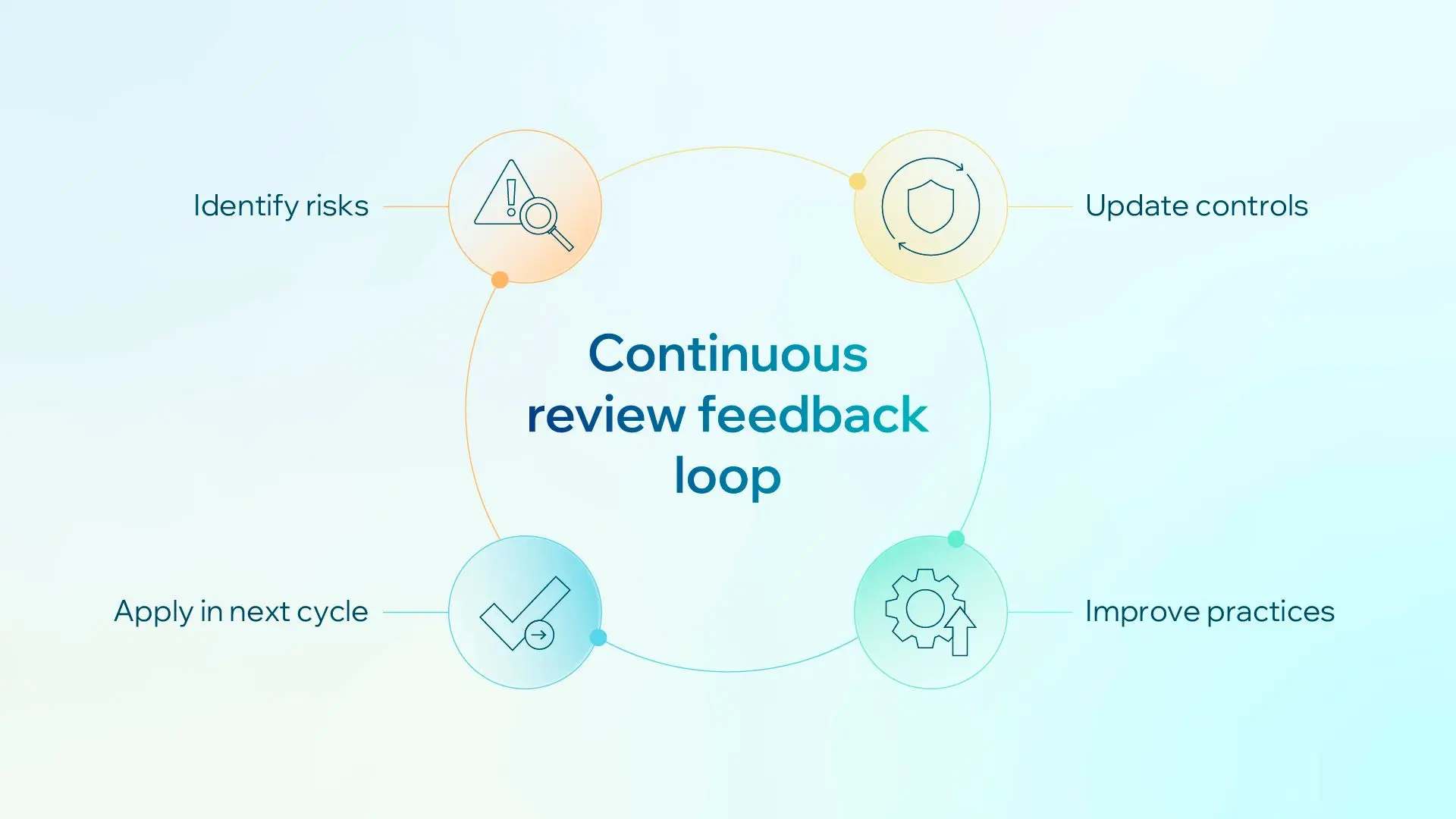
For long-running enterprise engagements, this phase keeps governance active over time. Client environments change, dependencies age, requirements evolve, and risks shift. Continuous review helps teams reassess controls, track open risks, and improve the delivery process across future cycles.
Conclusion
A Secure Software Development Lifecycle makes security, quality, and governance part of software delivery from the start. For CodeLink, the value of SSDLC is not only in having a defined process but in having a risk-based methodology that can adapt to different client environments while keeping expectations, decisions, and risks visible.
Our tailored SSDLC gives teams a shared standard for making those decisions responsibly. It supports delivery momentum while maintaining the control, transparency, and security discipline required for secure, production-ready systems.
Huy Ngo
Delivery Manager