Offline-first AI Distribution Strategy for Institutional Scale
Learn what leaders must decide to distribute, govern, and maintain offline AI systems affordably across low-connectivity environments.

Offline-first AI can reduce dependence on continuous internet access by running inference locally. However, offline operation begins only after the required model and content have reached the device. Google’s on-device LLM tooling, for example, supports running language models completely on the device, while its official Gemma 4 E2B LiteRT-LM package is 2.58GB.
For institutional leaders, this makes distribution more than an implementation detail. An effective offline AI distribution strategy affects programme reach, affordability, governance, and long-term viability.
Distribution as a Programme Decision
Many offline-first AI strategy discussions often start with model performance. Can the system provide useful answers? Does it support the required languages? Can it run on available hardware?
While these questions matter, they do not solely determine whether users can obtain the system.
CodeLink’s proof of concept evaluated model packages ranging from approximately 1.57GB to 4.92GB, depending on the model and deployment format. More details in our full white paper Bringing AI within Reach.
These figures reflect the specific models and configurations tested and should not be treated as universal model-size requirements.
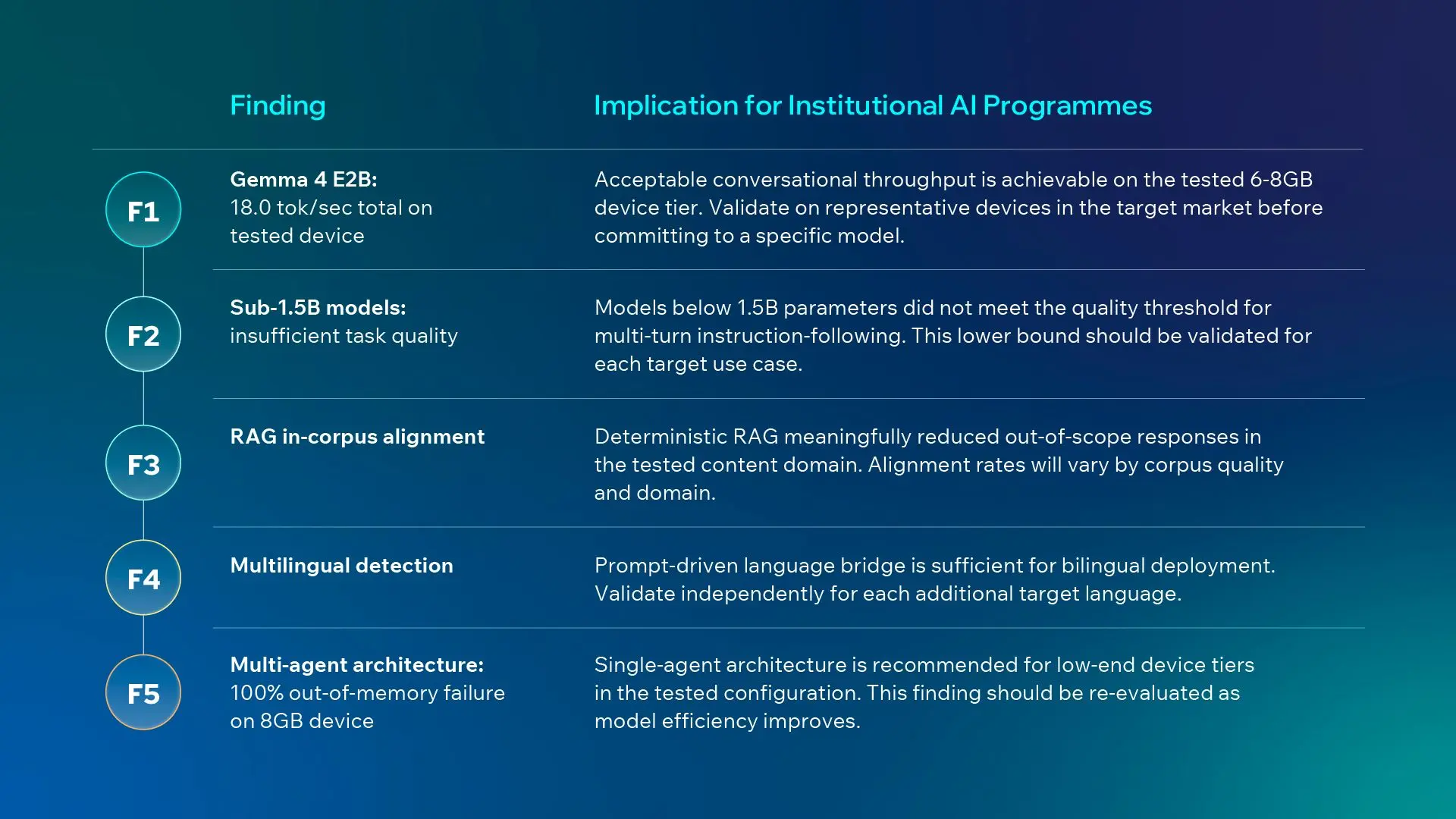
However, publicly available on-device packages show that gigabyte-scale models are not unusual. Google lists its mobile- and edge-oriented Gemma 4 E2B package at 2.58GB and E4B at 3.65GB. Package size varies according to the model architecture, capabilities, quantisation method, and deployment format.
At scale, even one large package creates a substantial distribution requirement. If 10,000 devices independently receive a 4GB package, the programme delivers approximately 40TB of aggregate data.
That does not make direct downloading impossible. Google Play supports applications larger than its standard 200MB base-module limit through Play Feature Delivery, Play Asset Delivery, and third-party content-delivery networks. Google currently permits up to 4GB of cumulative compressed downloads to an individual device through an Android App Bundle.
A primary strategic concern is that each device still needs a sufficient connection, storage capacity, and opportunity to complete that download.
1. Choosing Who Bears the Access Cost
Cloud-based AI services can create recurring costs through connectivity, hosted infrastructure, and usage-based inference. Offline-first AI can reduce some of these costs because queries are processed locally after installation.
However, local inference shifts more of the connectivity requirement toward initial distribution and subsequent updates. It does not entirely eliminate that requirement.
This distinction matters in low-connectivity markets. The International Telecommunication Union reports that, in nine out of 10 low-income economies, a 5GB mobile broadband basket costs more than 10% of average monthly income. For the lowest 40% of earners in low-income economies and least-developed countries, the average burden rises to around 20%.
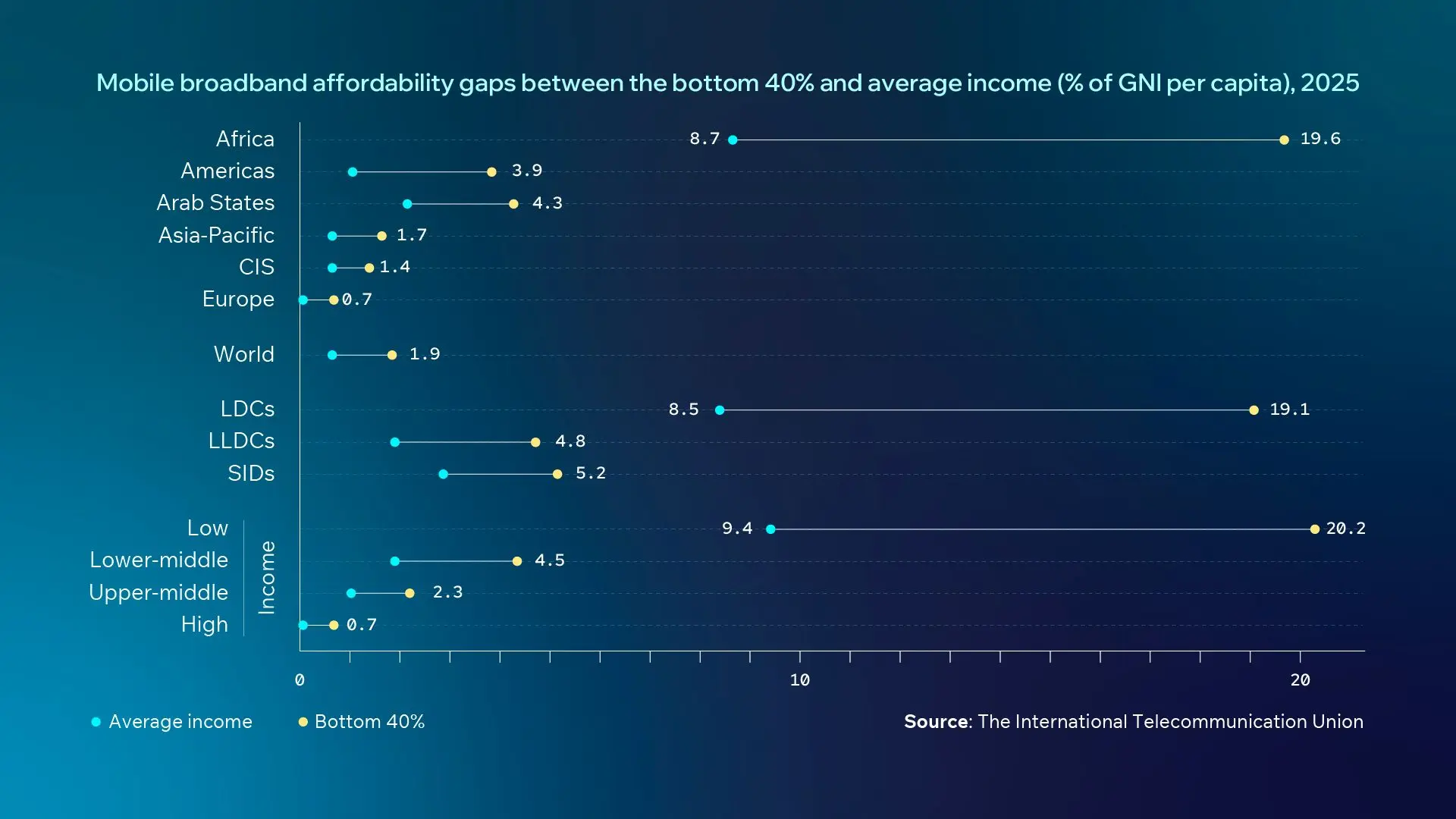
Institutional leaders may want to determine who bears the cost of moving large packages to devices.
User-Managed Access
Each user downloads the application and model independently.
This is operationally straightforward but assumes users have affordable data, reliable connectivity, sufficient storage, and the ability to recover from interrupted installations.
For some audiences, that may be reasonable. For others, especially in developing nations, it may create an access barrier before the programme begins.
Institution-Managed Access
The institution funds the initial download and distributes approved packages through schools, clinics, offices, community hubs, or programme operators.
This can reduce the data burden placed on users, but it creates operational responsibilities around training, device management, installation support, and update coordination.
Hybrid Access
Connected users download directly, while users in constrained environments receive the system through managed distribution points.
In CodeLink’s PoC, a teacher or designated source device downloaded the model once, then shared it locally with student devices. Bluetooth Low Energy supported device discovery, while Wi-Fi Direct handled the large file transfer. This reduced the need for every student to download the same multi-gigabyte package using mobile data.
For many institutional AI programmes, a hybrid model may be the most practical because it accommodates different connectivity conditions instead of imposing one distribution path on every user.
2. Defining Meaningful Access
A system is not meaningfully accessible merely because it has been published.
Leaders should assess whether intended users can obtain, install, activate, and continue using the system under representative field conditions.
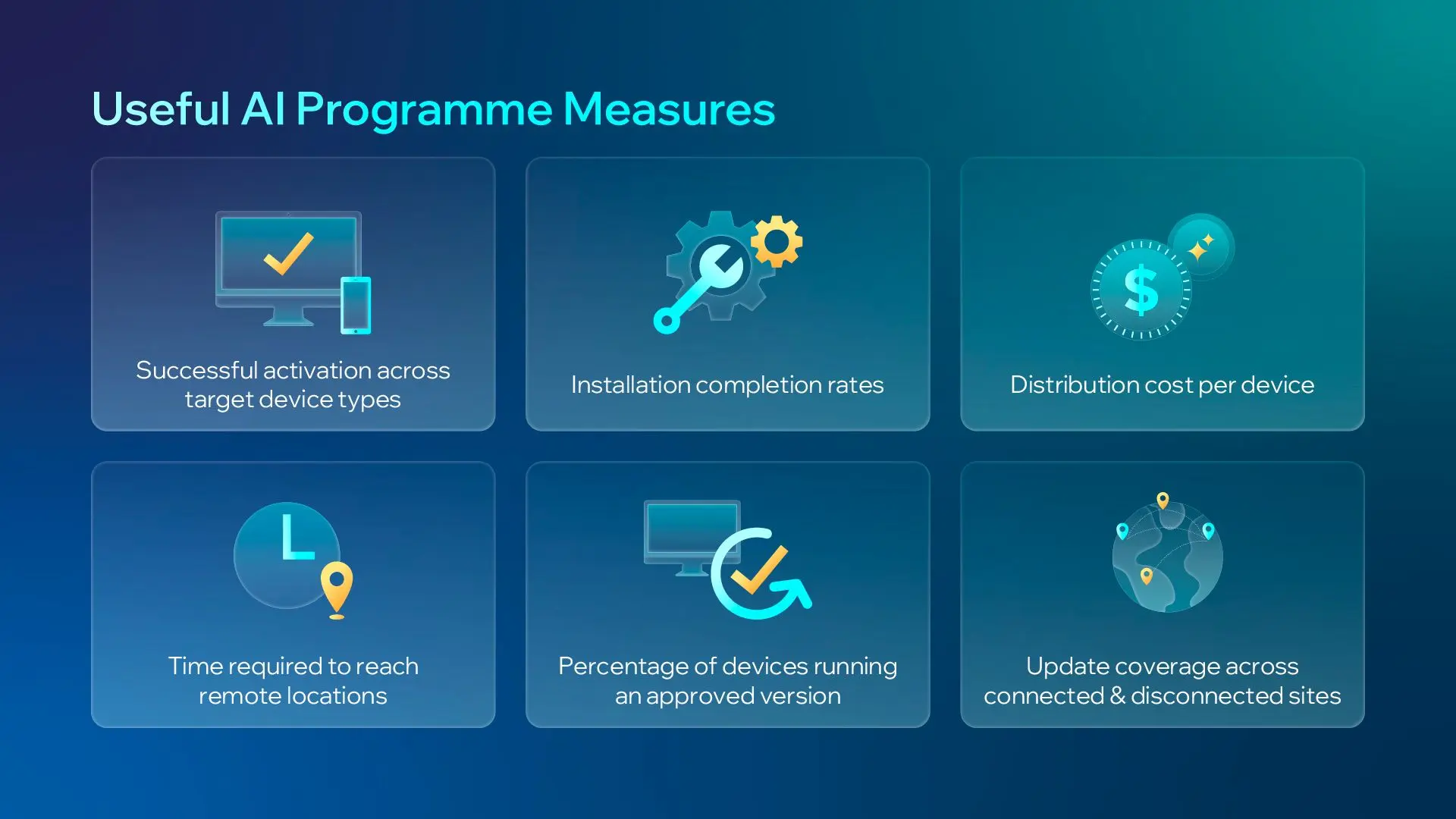
These measures help distinguish technical availability from effective offline AI deployment.
Without them, adoption may become concentrated among users with better connectivity, stronger devices, or more technical support. The programme may appear to scale while failing to reach part of its intended population.
3. Maintaining Institutional Control
Distribution also affects AI programme governance.
A decentralised delivery model may improve reach, but the institution generally should still control which models, content, and policy configurations are accepted by receiving devices.
Cryptographic signing can help confirm that a package came from an authorised source and was not altered during distribution. Android similarly requires applications to be cryptographically signed and uses signing keys to confirm that updates originate from the same authorised key holder.
However, signing alone does not create a complete governance system.
A secure update process should also address:
-
Approved and minimum-supported versions
-
Package and metadata expiration
-
Withdrawal of unsafe releases
-
Rollback to older vulnerable versions
-
Signing-key rotation and compromise
-
Ownership when the implementation partner changes
The Update Framework, a widely used model for securing software update systems, combines signatures with trusted-key metadata, file hashes, version numbers, and expiration dates. It is specifically designed to address risks such as rollback, stale updates, and compromised signing keys.
A critical executive issue is accountability: who has the authority to approve, replace, suspend, or retire each component of the system?
4. Planning for the Full Lifecycle
Many pilots focus on installing the system once. A production programme must maintain it over several years.
Models may be replaced. Validated content may require correction. Language resources and safety policies may change. Devices will be lost, replaced, or disconnected for extended periods.
An offline AI distribution strategy should therefore cover both:
-
Initial distribution of the application, model, and content
-
Ongoing delivery of updates, corrections, and replacements
These processes do not have to use identical channels.
The initial model may be distributed through regional hubs or shared connections. Smaller content updates may be delivered more frequently. Where supported, mobile devices can also connect directly through Wi-Fi Direct without an intermediate access point, allowing nearby devices to exchange data locally.
The specific transfer technology is an engineering decision. The leadership concern is whether the proposed process fits the institution’s operating capacity.
5. Building an Operating Model for Scale
At scale, distribution becomes an organisational network.
An education programme may use regional offices and schools. A healthcare programme may rely on district facilities and community health workers. An agricultural programme may use field agents, cooperatives, or service centres.
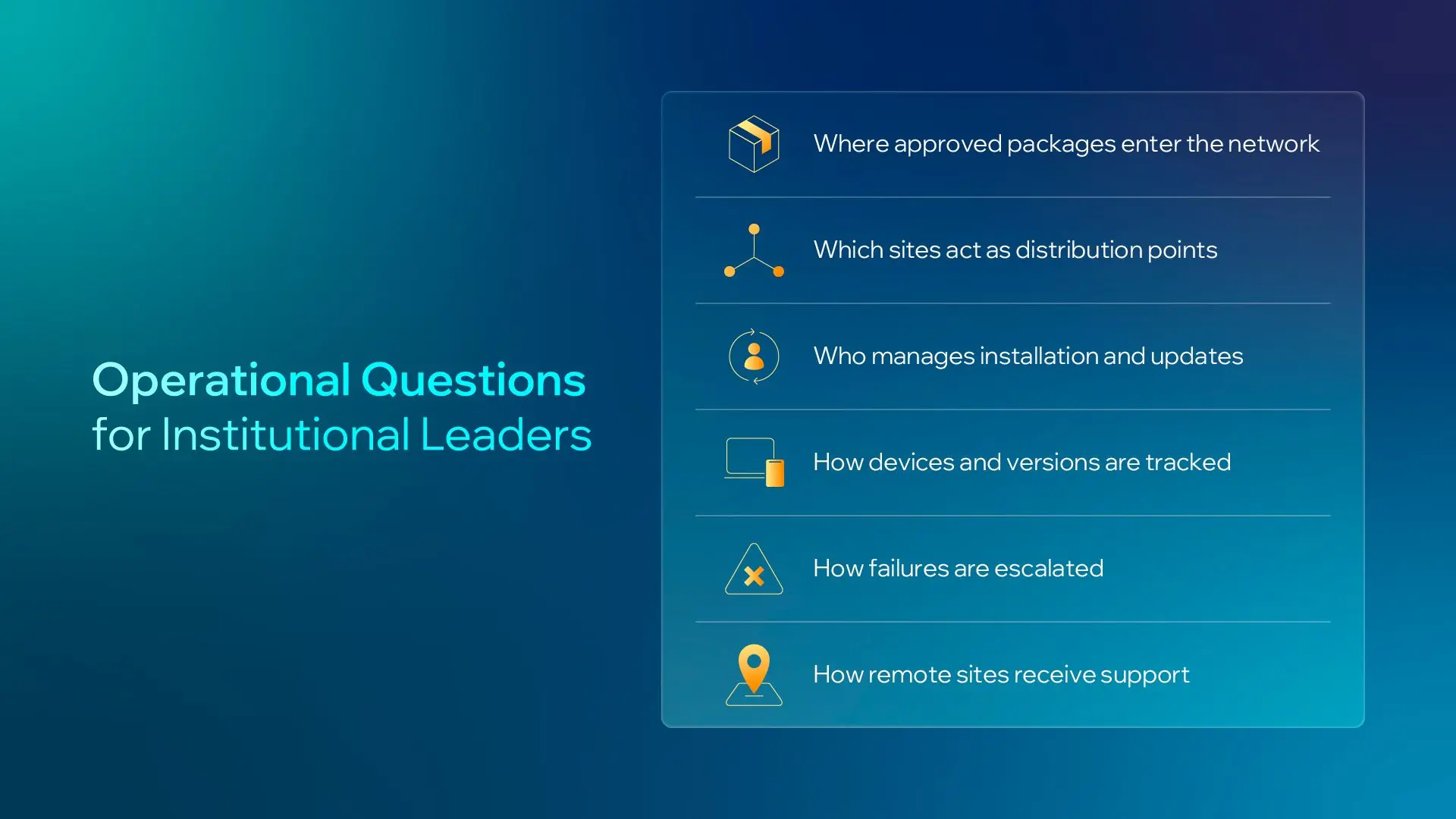
A technically sound architecture will not scale if it depends on staff, facilities, or processes the institution cannot sustain.
The business case should therefore account for more than model and device costs. It may also need to include distribution infrastructure, operator training, content validation, update monitoring, governance, and user support.
Conclusion: The Strategic Test
Offline-first AI can make conversational systems viable where continuous connectivity cannot be assumed. But the ability to run offline is not the same as the ability to scale offline.
Institutions must decide how packages reach users, who pays for delivery, how updates remain controlled, and which teams will sustain the system over time.
The strategic question is not only: Can this AI system run on the target device?
It is: Can our organisation deliver, govern, and maintain it across the full target population?
CodeLink
Founded in 2016
We partner with enterprises and institutions to turn complex technology challenges into reliable digital systems through expert software engineering, AI implementation, and disciplined delivery.